Case Study

EduHub

Designing a Connected University Ecosystem for Learning, Engagement and Career Development

EduHub is a role-based university platform that centralizes learning resources, student engagement, achievements, club activities, and career opportunities into one connected digital ecosystem.
Executive Summary

Executive Summary

Universities often rely on multiple disconnected platforms for academic resources, student engagement, announcements, and career opportunities. This fragmentation makes it difficult for students to stay informed, showcase achievements, and connect with recruiters.

EduHub was designed to solve this challenge by bringing students, tutors, recruiters, and club administrators into a single role-based platform. Using Flutter and Firebase, the application provides secure authentication, real-time data management, and personalized dashboards tailored to each stakeholder.

The project strengthened my understanding of system design, role-based architecture, and building software around user needs rather than individual features.

DurationApproximately 3 Months
PlatformMobile Application
FrameworkFlutter
BackendFirebase
DatabaseCloud Firestore
AuthenticationFirebase Authentication
ArchitectureRole-Based Access Control (RBAC)
Primary UsersStudents, Tutors, Recruiters, Club Administrators
StatusCompleted
Problem

The Problem

University information is often scattered across multiple disconnected platforms.

Students must frequently switch between WhatsApp groups, social media pages, notice boards, and classroom announcements to find important information. This results in:

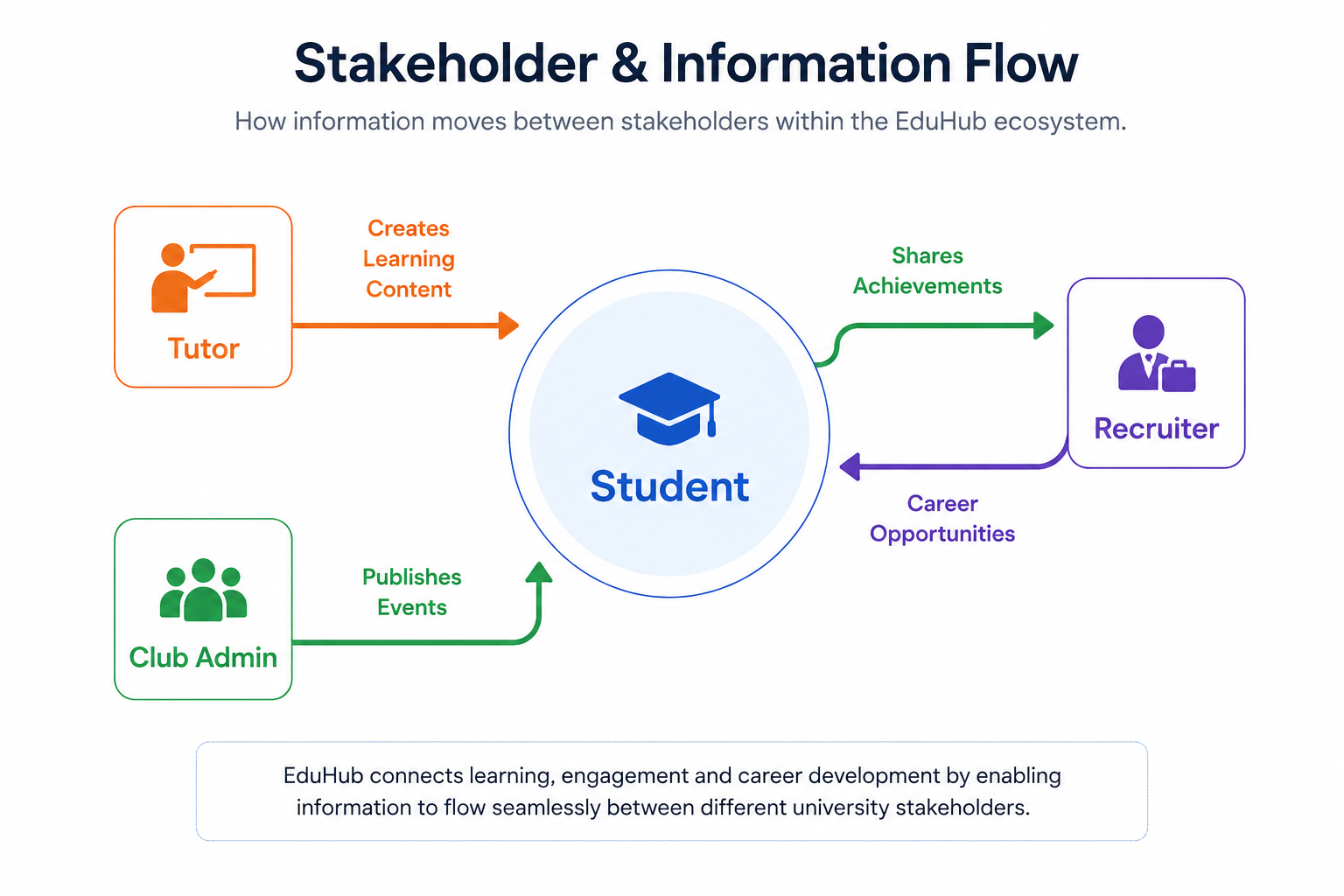
The challenge was not simply creating another learning platform — it was designing a connected ecosystem where information could flow naturally between different stakeholders.

Research

Stakeholder Analysis

Stakeholder and information flow diagram
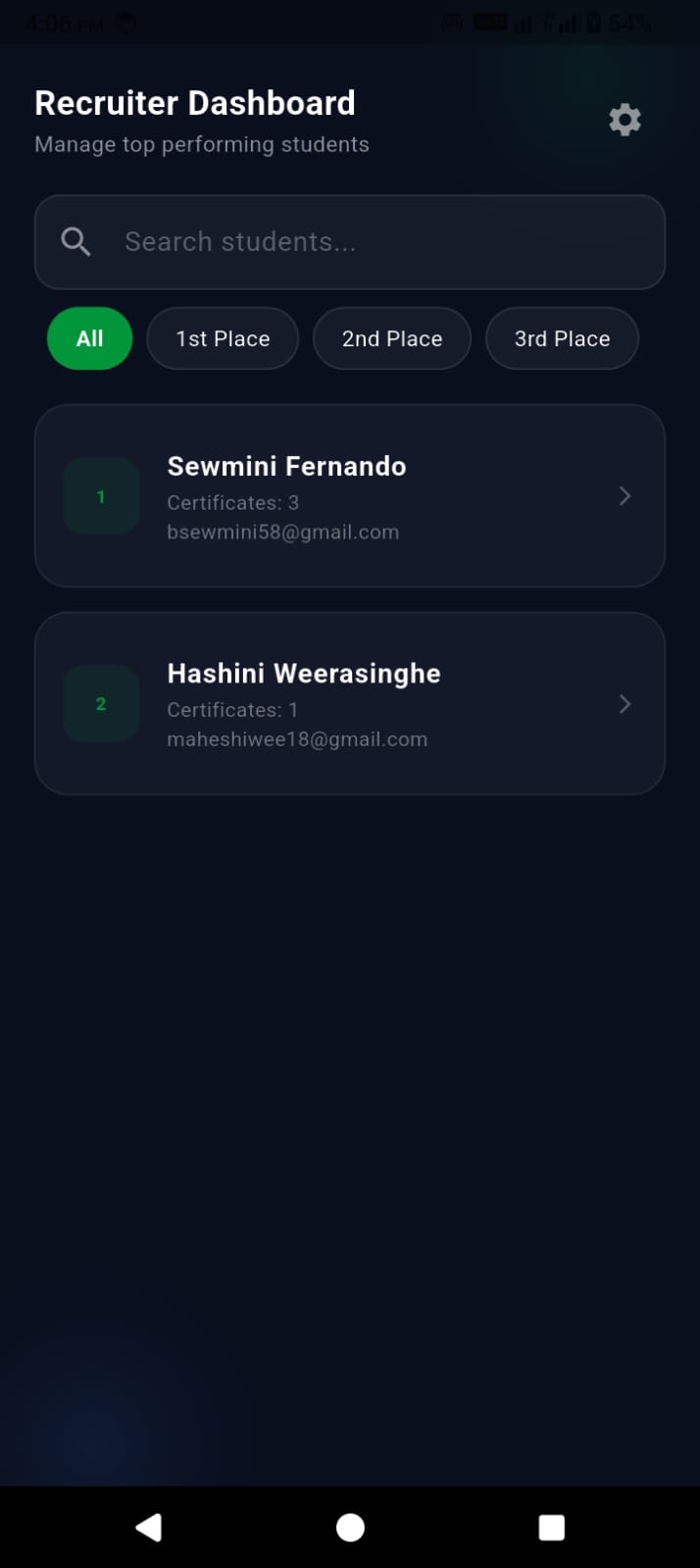
Students

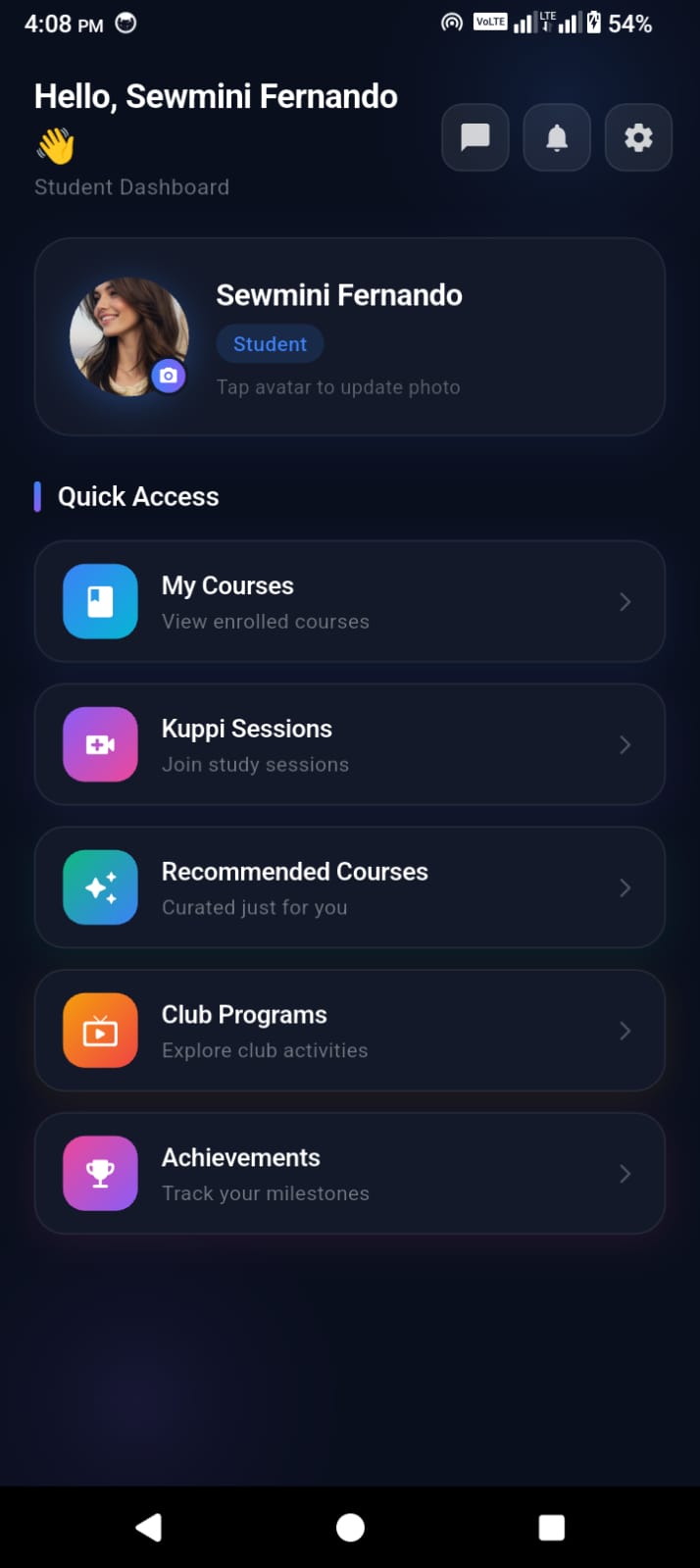
Learn, participate in university activities, build achievements and explore career opportunities.

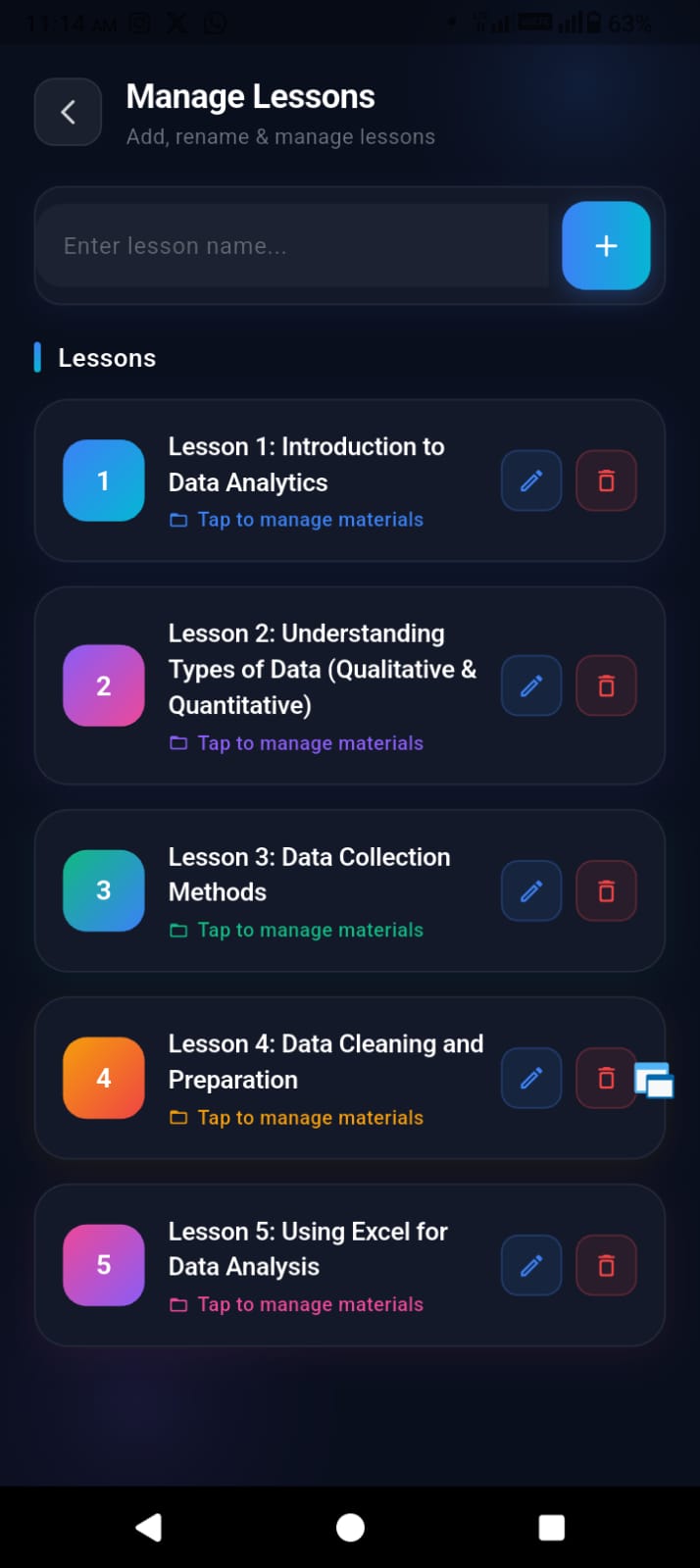
Tutors

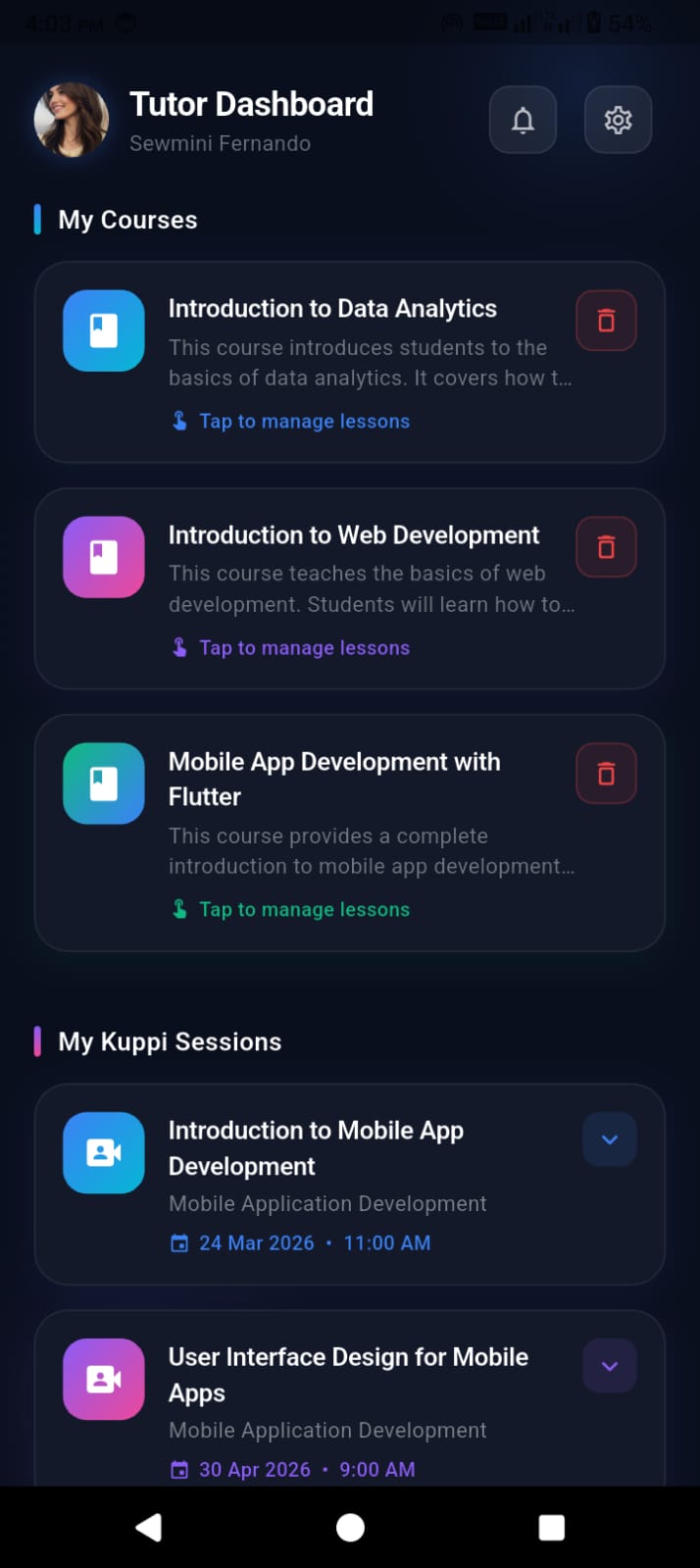
Create courses, manage learning materials and support student development.

Recruiters

Discover talented students through verified achievements and portfolios.

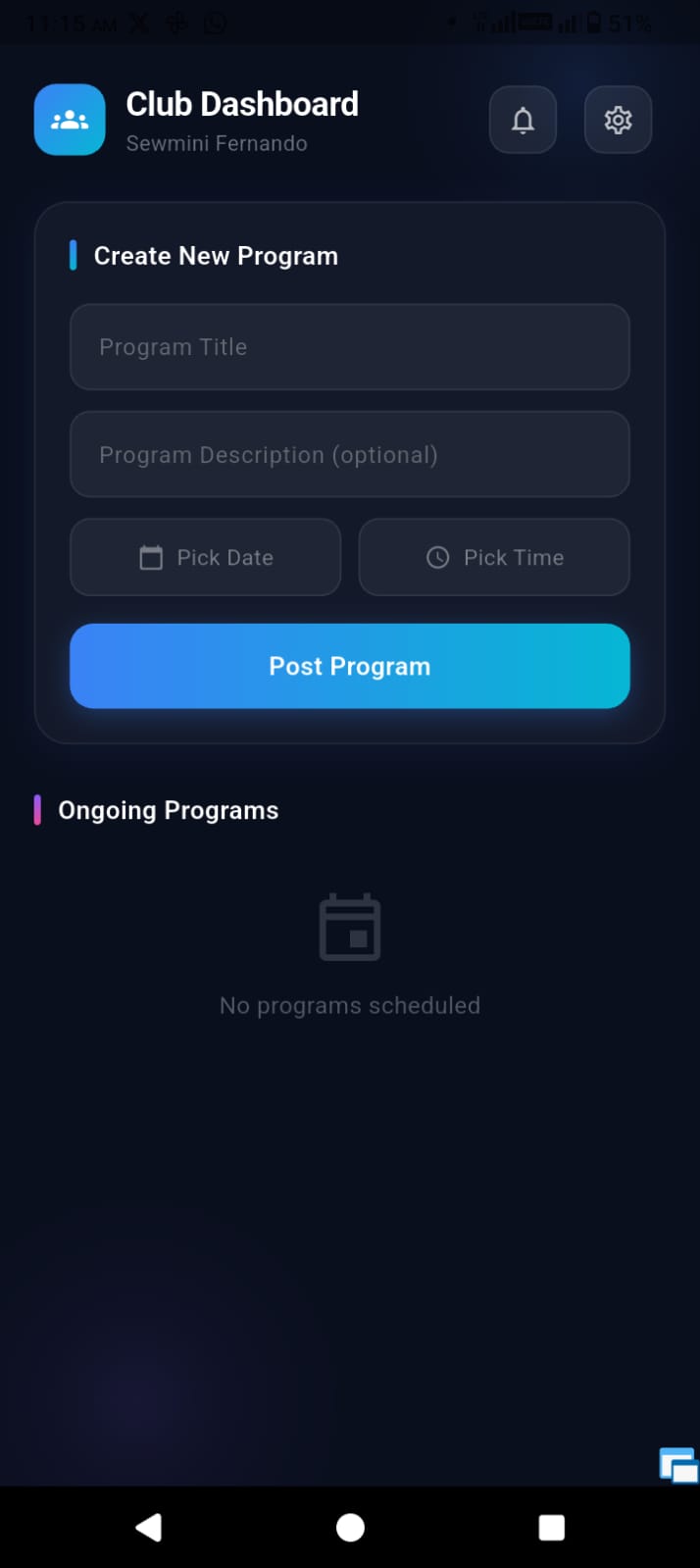
Club Administrators

Organize events, publish announcements and increase student engagement.
Solution

Solution Overview

EduHub provides a centralized platform where each stakeholder receives a personalized experience based on their role.

Students can access learning resources, complete courses, participate in university activities, earn achievements, and discover career opportunities. Tutors manage educational content and support student learning. Recruiters identify talented students through verified achievements and certifications. Club administrators improve student engagement by managing university events and announcements.

The platform combines these independent activities into one connected ecosystem while maintaining secure role-based access.

Architecture

System Architecture

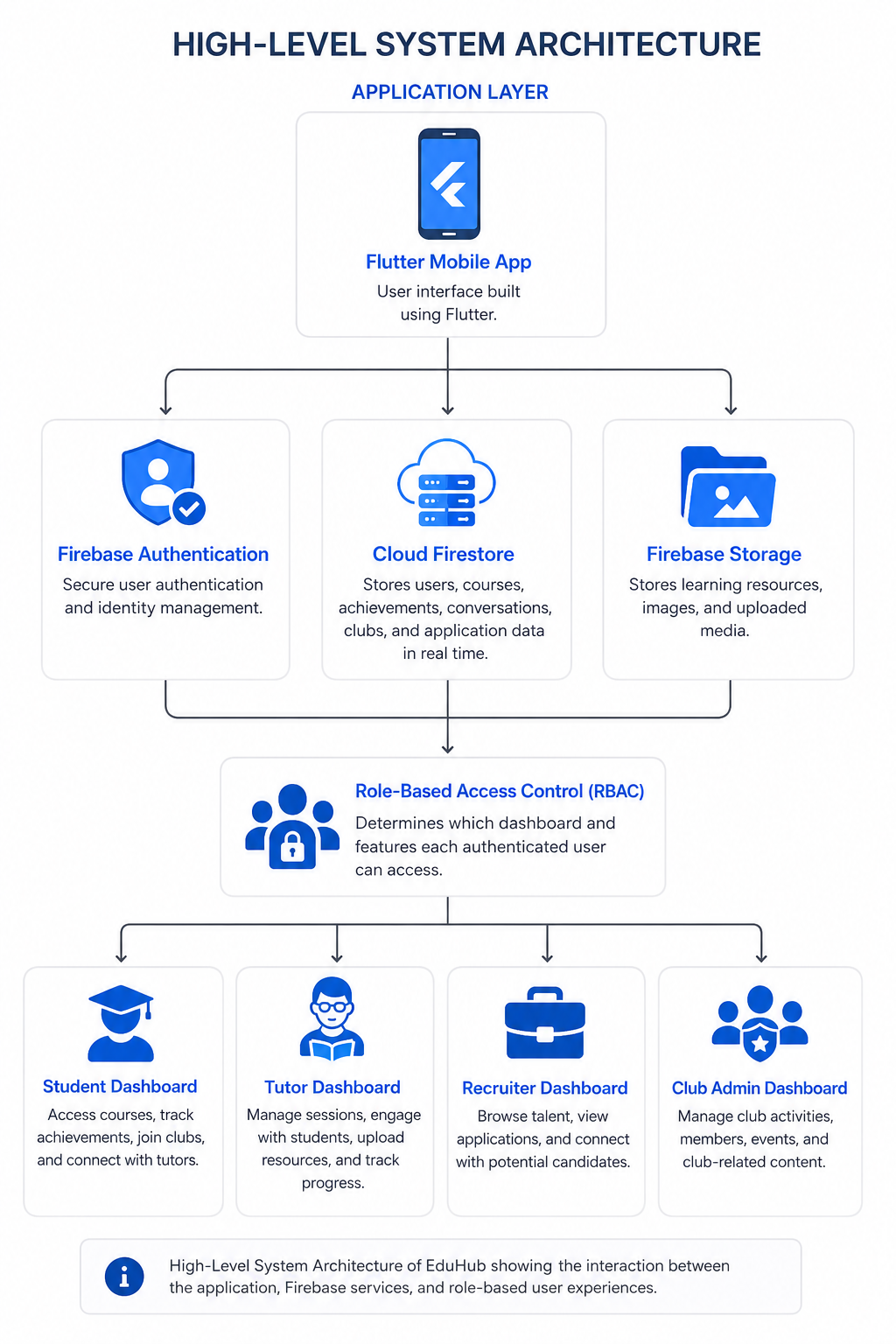
High-level architecture diagram

The application follows a role-based architecture built with Flutter and Firebase. Firebase Authentication manages user identity while Cloud Firestore stores application data in real time. Firebase Storage supports media uploads, and role-based authorization determines which dashboard each user can access after authentication.

This architecture separates authentication, data management, and user experience, improving maintainability and scalability.

Authentication & Authorization

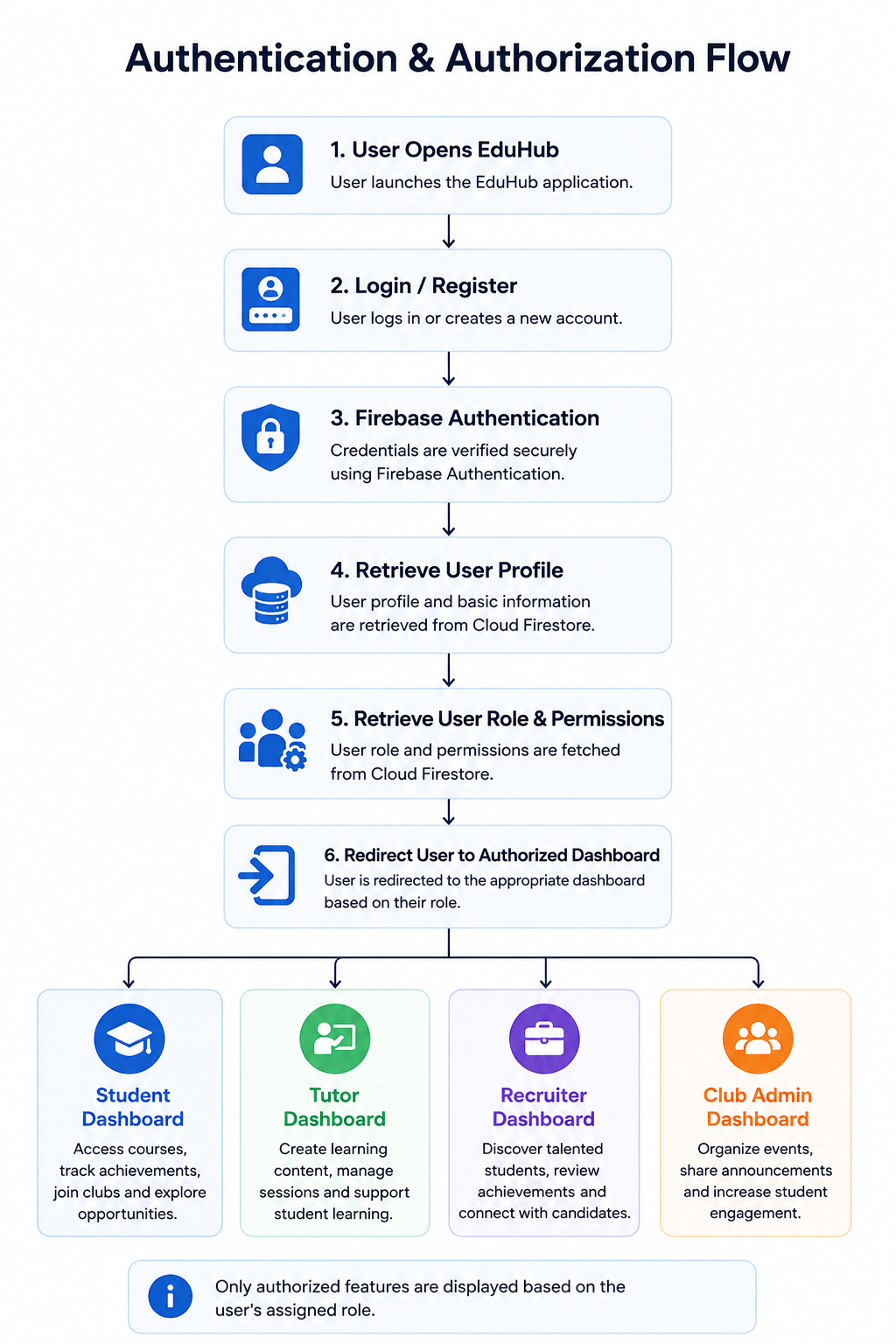
Authentication flow diagram

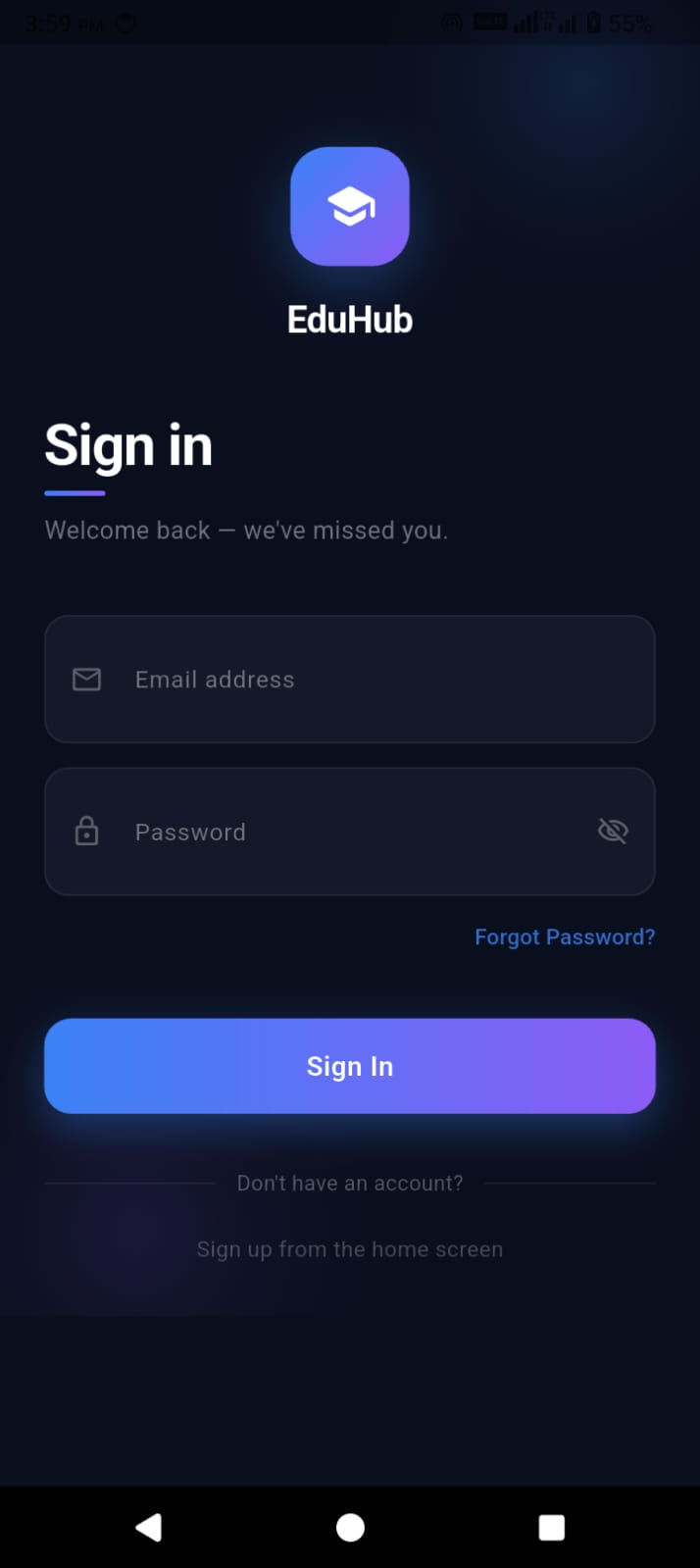
User authentication begins with Firebase Authentication, which securely verifies user credentials. After successful authentication, the application retrieves the user's profile and assigned role from Cloud Firestore.

The application then redirects users to the appropriate dashboard based on their role. This approach ensures that students, tutors, recruiters, and club administrators only access functionality relevant to their responsibilities.

Why These Technologies?

TechnologyReason
FlutterCross-platform mobile development with a single codebase
Firebase AuthenticationSecure authentication without custom backend implementation
Cloud FirestoreFlexible NoSQL database supporting real-time synchronization
Firebase StorageEfficient storage for learning resources and media
Role-Based Access ControlPersonalized user experiences while maintaining security
Impact

Challenges & Solutions

Challenge 1

Managing multiple user roles securely.

Solution

Implemented Role-Based Access Control (RBAC) to ensure users only access features relevant to their responsibilities.

Challenge 2

Designing a scalable database for multiple stakeholders.

Solution

Structured Cloud Firestore collections to separate users, courses, conversations, achievements, enrollments, and clubs while maintaining logical relationships.

Challenge 3

Maintaining a consistent user experience across different dashboards.

Solution

Designed modular Flutter components that could be reused while providing role-specific functionality.

Lessons

Lessons Learned

Building EduHub taught me that successful software begins with understanding people rather than writing code.

The most challenging aspect was not implementing features — it was designing how information should flow between different stakeholders while balancing usability, security, and scalability.

This project strengthened my understanding of:

What's Next

Future Roadmap

Although EduHub currently focuses on centralizing university services, several opportunities exist to expand the platform through AI.

Future EnhancementBusiness Value
AI Study AssistantPersonalized academic support for students
Resume AnalyzerImprove graduate employability
AI Course RecommendationsPersonalized learning paths
AI Talent MatchingHelp recruiters identify suitable candidates
AI Event RecommendationsIncrease student engagement through personalized event suggestions
EduHub taught me that technology alone does not solve problems. Understanding people, their goals, and how information should move between them is what transforms software into a meaningful solution.